

NIGERIA
Located in West Africa on the Gulf of Guinea, Nigeria is Africa’s most populous country and largest economy, with a gross domestic product of $440.8 billion. Cancer is the second leading cause of non-communicable disease-related deaths, with breast, cervical, prostate, and colorectal cancers accounting for more than half (50.7%) of the estimated new cancer cases in 2020.
Stats at a Glance
213.4m
People in Nigeria
125,000
Approximate new cancer cases in a year
79,000
Approximate cancer deaths in a year
In 2018, Nigeria’s Federal Ministry of Health launched its five-year National Cancer Control Plan, which outlined the country’s key cancer control strategies across prevention, diagnosis and treatment, supply chain, hospice and palliative care, advocacy and social mobilization, data management and research, and governance and finance.
At the direction of Nigeria’s Federal Ministry of Health, Nigeria joined the African Access Initiative (AAI) at its launch in June 2017. Since then, federal medical centers and university teaching hospitals across the country’s six geopolitical zones have joined AAI to address their cancer priorities.
AAI In Nigeria

Strengthening Connections Across Lung Diseases
Lung health is a critical issue, with over 1 billion people suffering from acute and chronic lung diseases. Low- and middle-income countries (LMICs) are disproportionately impacted by the double burden of infectious and non-communicable diseases (NCDs), where the high burden of tuberculosis and lower respiratory tract infections is impacted by growing rates of lung NCDs…
Keep reading
AAI Child Life Practice Training Expands Pediatric Cancer Care
Child life practice can help improve the hospital experience for pediatric patients and families by reducing fear and distress, promoting coping, and fostering hope during treatment. At the request of the University of Abuja Teaching Hospital’s (UATH) pediatrics team and in collaboration with the Burkitt’s Lymphoma Fund for Africa (BLFA) and Faber Daeufer & Itrato…
Keep reading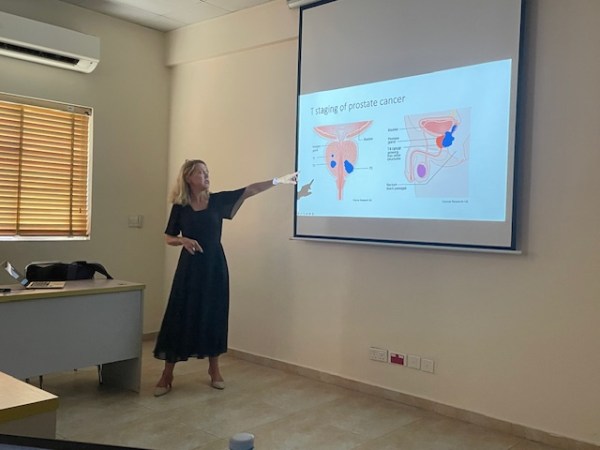
BVGH and MedServe Partner to Improve Prostate Cancer Care in Nigeria
Prostate cancer is one of the most common cancers affecting men—in Nigeria and globally—and one of the most treatable when caught early. To help address the burden of prostate cancer in Nigeria, BVGH worked closely with its Nigerian partners – MedServe, MedServe-LUTH Cancer Centre (MLCC), and Lagos University Teaching Hospital (LUTH) to develop and conduct…
Keep reading
Communities of Practice Breakdown Silos, Strengthen Ties, and Facilitate Sharing Knowledge
In Nigeria, approximately 60% of cancer patients require radiotherapy as part of their care – yet access to this critical treatment modality has long been out of reach for most patients. To close this gap, Nigeria’s Federal Ministry of Health and Social Welfare (FMOH) is equipping six public hospitals with state-of-the-art radiotherapy systems, with MedServe,…
Keep reading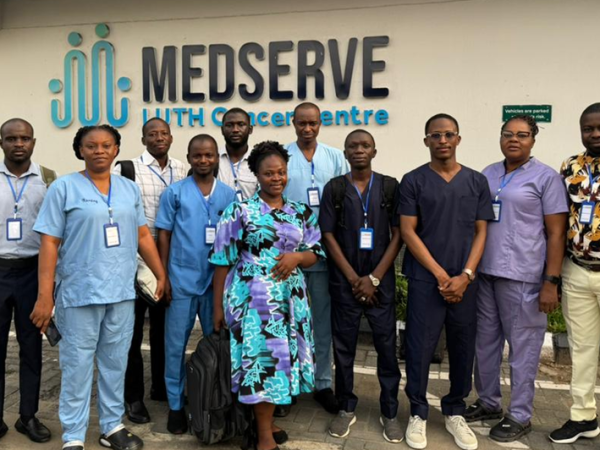
BVGH-MedServe Radiotherapy Training Program Kicks Off Year 2
In 2024, BVGH, the Nigeria Sovereign Investment Authority (NSIA), MedServe, and the MedServe-LUTH Cancer Center (MLCC) launched a first-of-its-kind radiotherapy training program for Nigerian medical physicists, nurses, radiation oncologists, and radiation therapists. More than 60 radiotherapy professionals from eight public hospitals representing all six geopolitical zones of Nigeria completed the intensive training program. This year,…
Keep reading
Turning Data Into Action for Children With Cancer in Nigeria
A child diagnosed with cancer in sub-Saharan Africa is more than five times as likely to die from their malignancy as a child in North America. While delayed diagnosis and limited access to treatment drive these disparities, Nigeria faces an additional challenge: no published data exist on the cost or cost-effectiveness of childhood cancer services.…
Keep readingSomething went wrong. Please refresh the page and/or try again.
Our Hospital Partners
- ASI Ukpo Hospital
- Federal Medical Center (FMC) Owo
- Federal Medical Center (FMC) Bida
- Federal Teaching Hospital (FTH), Katsina
- Jos University Teaching Hospital (JUTH)
- NSIA-LUTH Cancer Center (NLCC)
- University of Abuja Teaching Hospital (UATH)
- University College Hospital (UCH) Ibadan
- University of Ilorin Teaching Hospital (UITH)
Data on this page sourced from:
Nigeria population: World Development Indicators | DataBank (worldbank.org)
Cancer cases and cancer deaths per year: VizHub – GBD Results (healthdata.org)
Cancer occurrences by type: 566-nigeria-fact-sheets.pdf (iarc.fr)
Cancer control plan: https://www.iccp-portal.org/system/files/plans/NCCP_Final%20%5B1%5D.pdf