
Bridging the Knowledge Gap:
Impact of Community Outreach on Childhood Cancer Awareness and Hospital Navigation in Nigeria

Contributing Authors:
Zainab Shinkafi Bagudu, MBBS, Medicaid Cancer Foundation, Nigeria
Maryam Mukhtar Ali, Medicaid Cancer Foundation, Nigeria
Micaella Jorge, PhD, BIO Ventures for Global Health, USA






Introduction
Childhood cancer is an emerging public health concern in many low-resource settings like sub-Saharan Africa, where delayed diagnosis and limited access to healthcare significantly impacts patient survival outcomes. Public awareness about childhood cancer, hospital navigation, and the proper use of medications plays a critical role in early childhood cancer detection, treatment, and survivorship.
However, little is known about the baseline knowledge of childhood cancer in many African communities, especially in rural areas and among mothers who are often primary caregivers. To address this knowledge gap, the Medicaid Cancer Foundation (MCF), in partnership with BIO Ventures for Global Health (BVGH), conducted an awareness outreach program in Sheda village in Nigeria, a rural community outside the municipal city of Abuja. Surveys were conducted with program participants to assess the level of childhood cancer awareness in the community before and after educational intervention.
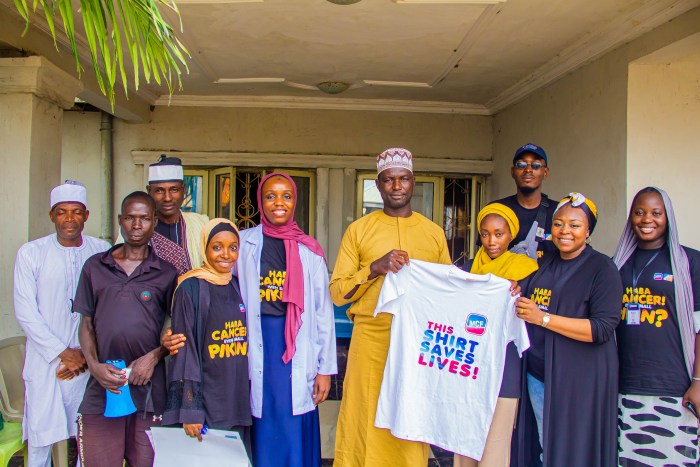
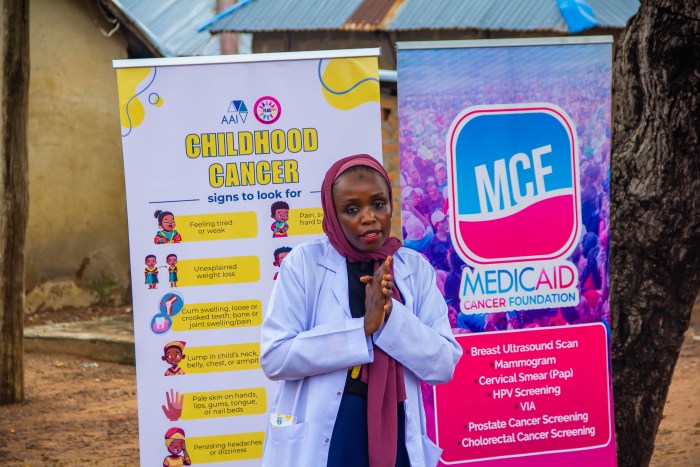
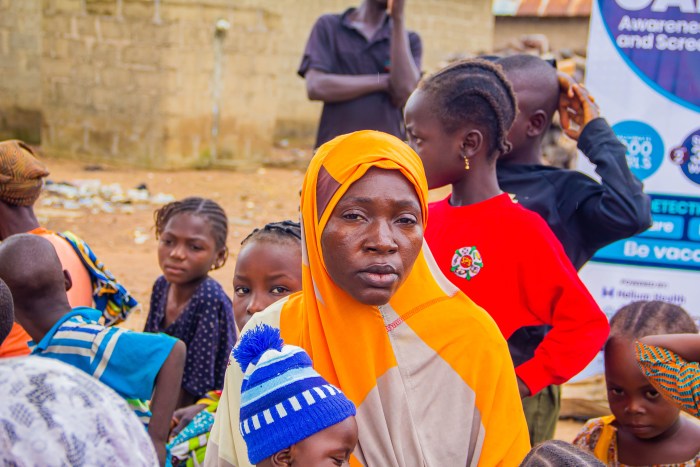
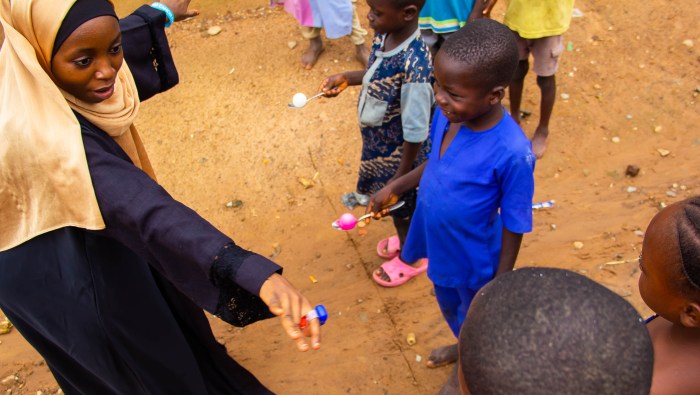
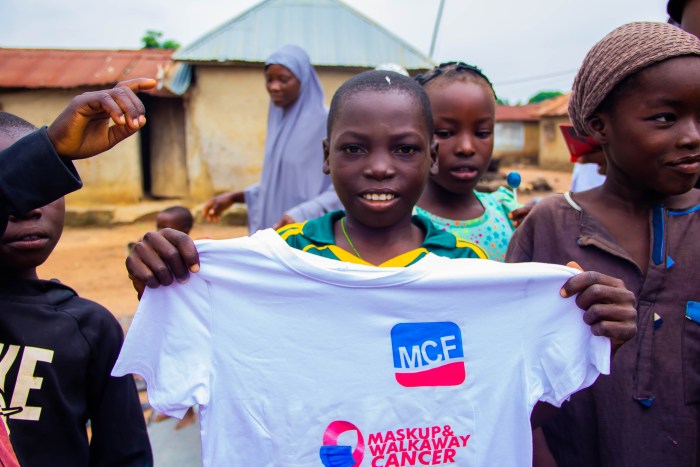
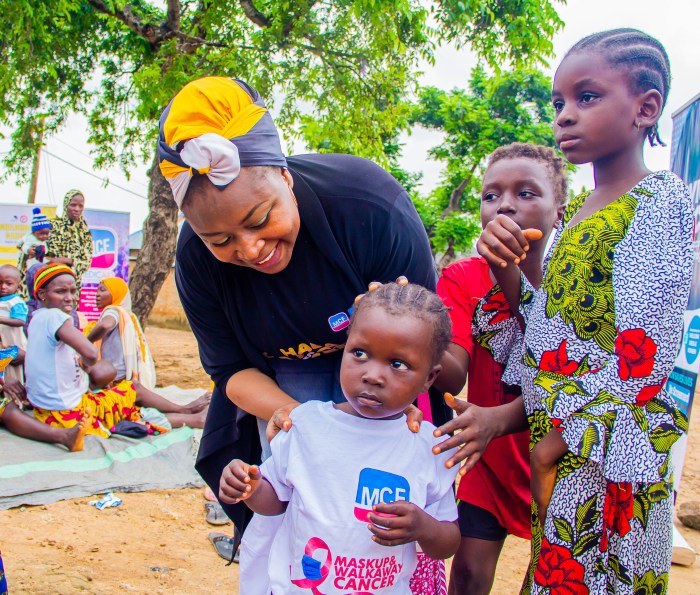
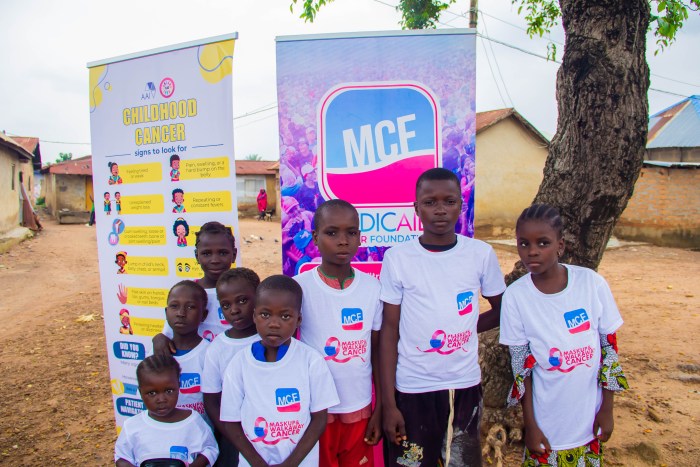
The program aimed to boost community knowledge of childhood cancer, enhance hospital navigation skills, and address misconceptions around cancer medications. A physical sensitization session, led by a medical coordinator, used project-specific printed materials to engage participants, who were encouraged to ask questions. A medical doctor provided in-depth answers, fostering a stronger understanding of childhood cancer symptoms. Participants received educational brochures and flyers for further reference, and large awareness banners were placed at key community locations, such as the traditional ruler’s residence and main shops, ensuring continuous visibility. This initiative was designed to empower community members with essential, accurate information about childhood cancer care.
Methodology
To evaluate the effectiveness of the childhood cancer awareness campaign, a survey was conducted among 75 participants who attended the educational program at Sheda village. All participants were mothers, representing 100% of the sample population, given the role they often play in the household, including decision-making regarding their children’s health.
A random sampling method to select participants was used, ensuring that the sample was representative of the broader community.
The survey was designed to determine a baseline for the participants’ level of awareness concerning three key areas:
- Childhood cancer: symptoms, risk factors, and the importance of early detection.
- Hospital navigation: how to access healthcare services for sick children, including when to seek medical attention and how to navigate the healthcare system at a nearby hospital, the University of Abuja Teaching Hospital (UATH).
- Medications: familiarity with medications commonly prescribed to sick children, including understanding dosage, potential side effects, and adherence to prescribed treatment plans.
The survey utilized both qualitative and quantitative methods, incorporating a combination of open-ended and multiple-choice questions. The baseline results were compared with follow-up responses collected at the conclusion of the intervention.
Results and Findings
The survey results underscored significant gaps in the community’s knowledge of childhood cancer, hospital navigation, and medication, highlighting the need for targeted health education in rural communities in Nigeria.
Awareness of Childhood Cancer Symptoms
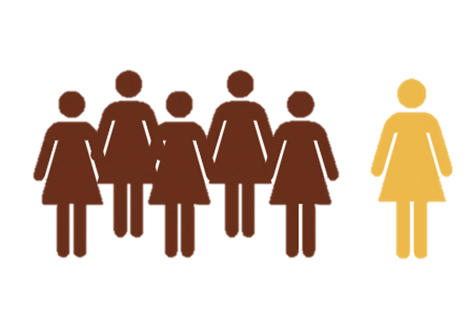
Findings revealed that only 15% of the participants were aware of any childhood cancer symptoms, such as persistent fever, unexplained weight loss, or swollen lymph nodes. A notable 85% of the participants lacked awareness of childhood cancer symptoms, reflecting an urgent need for more comprehensive community education on early childhood cancer signs. This low level of awareness in the surveyed community is indicative of potential delays in seeking diagnosis and treatment for children, which can severely impact patient outcomes.
Hospital Navigation
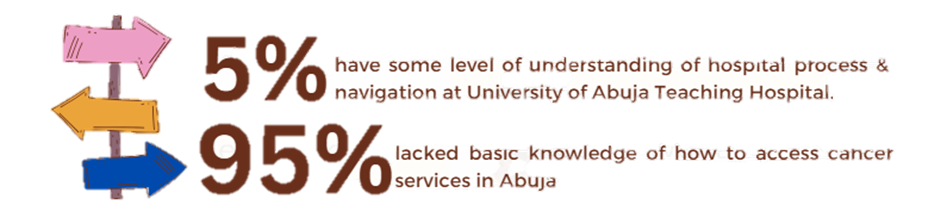
The survey found that the overwhelming majority (95%) of participants lacked basic knowledge of how to access healthcare services at UATH, which offers specialized cancer care, or nearby hospitals for both cancer treatment and more common health conditions, like malaria. This gap in hospital navigation awareness points to a critical barrier to obtaining timely and appropriate medical care in and around Abuja.
Impact of the Community Outreach Program on Behavioural Change
Following the conclusion of the community outreach program, there was significant improvement in the participants’ awareness and planned health-seeking behavior. Ninety percent of participants reported that they were sufficiently informed about childhood cancer symptoms. Respondents better understood how to navigate the hospital system and expressed their willingness to seek medical assistance through the patient navigators available at UATH. This anticipated shift in behaviour suggests that the program effectively empowered caregivers to make informed medical decisions for their children. However, 10% of participants remained steadfast in their adherence to cultural beliefs such as the continuous utilization of traditional medicine/herbs rather than seeking professional medical assistance at the hospital, highlighting the persistent influence of cultural beliefs and traditions on health behaviours in rural communities in Nigeria.
Conclusion
The extremely low levels of childhood cancer awareness and familiarity with hospital navigation prior to the community outreach program’s implementation underscores the critical role of such programs in educating caregivers.
The program successfully closed many knowledge gaps, with most participants gaining awareness of childhood cancer symptoms and a clear understanding of how to access healthcare services when needed. This highlights the effectiveness of educational interventions in improving health literacy and promoting proactive healthcare-seeking behaviour.
However, the continued reliance on traditional medicine among a minority of participants suggests that future efforts must include strategies to engage with cultural beliefs and address misconceptions about modern healthcare, including:
- Improving cancer awareness and education by delivering targeted campaigns to increase knowledge about childhood cancer symptoms and hospital navigation.
- Building capacity by training healthcare workers and patient navigators to improve community access to medical services.
- Advocating for health policy changes to improve community outreach and healthcare access in rural or underserved communities.
- Mobilizing the community by partnering with local spiritual leaders to combat myths and encourage modern medical treatment.
- Monitoring and evaluating changes in awareness and behaviours after interventions to inform future educational programs.
- Providing patient navigators to help patients access care and overcome barriers through patient navigation services.
References
World Health Organization (WHO). (2021). Childhood Cancer Fact Sheet. https://www.who.int/news-room/fact-sheets/detail/cancer-in-children
International Agency for Research on Cancer (IARC). (2020). Cancer Prevention and Early Detection in Low- and Middle-Income Countries: Key Messages. Lyon, France: IARC.
American Cancer Society. (2023). Understanding Cultural Beliefs and Health Behaviours in Cancer Prevention and Treatment. https://www.cancer.org/
National Institutes of Health (NIH). (2019). Barriers to Cancer Diagnosis and Treatment in Low-Resource Settings. Journal of Global Oncology, 5, 1-9. doi:10.1200/JGO.19.00123
Childhood Cancer International (CCI). (2022). The Global Campaign for Childhood Cancer: Enhancing Awareness and Access to Care. Retrieved from https://childhoodcancerinternational.org/
African Development Bank (AfDB). (2023). Healthcare Infrastructure and Access in Sub-Saharan Africa: Addressing Gaps for Cancer Patients. Abidjan, Côte d’Ivoire: AfDB.
National Cancer Institute (NCI). (2020). The Importance of Patient Navigation in Cancer Care. Cancer Care Today, 18(3), 123-130.